Session 1.1.2 – Course Overview
At-a-glance
| Course | R2795: Data to Decisions: Introduction to AI in Healthcare |
| Format | Dual-campus in-person elective; students at Inova attend virtually but synchronously |
| Schedule | Afternoons (12:00–4:00 PM) on Mon/Tue/Thu/Fri |
| Assessment | Pass/Fail |
| Prerequisites | No prior knowledge required; only prerequisite is that the student has heard there is something called AI |
Course Introduction
Artificial Intelligence (AI) is the ability of computer systems to perform tasks that traditionally require human intelligence.
This elective provides a basic understanding of major AI model types and how to think about applying AI in clinical medicine. It is designed to help future clinicians recognize, evaluate, and safely use AI systems they will encounter in practice.

There is a significant gap in basic AI understanding within the medical curriculum. As AI technologies continue to expand in healthcare settings, medical students need foundational knowledge to understand, evaluate, and work alongside these tools effectively. The purpose of this elective is to provide students with that foundational understanding of artificial intelligence and its applications in healthcare, preparing them for a clinical environment where AI tools are becoming increasingly integrated into patient care. Part of this foundation is having a high level understanding of the underlying models for this tools. We believe that the best way to explain how AI models operate is through examining currently available tools.
Prerequisites
This course assumes no prior knowledge of AI, machine learning, or computer science. The only prerequisite is that students have heard there is something called AI. The course is designed to be accessible to all medical students regardless of their technical background.
Where You'll See AI Expanding
During your medical career, you can expect to encounter AI expanding in various contexts:
- Clinical decision support systems integrated into electronic health records
- Diagnostic imaging analysis and interpretation tools
- Predictive analytics for patient risk stratification
- Natural language processing for clinical documentation
- Personalized treatment recommendations based on patient data
- Administrative and operational efficiency tools
Course Goals
By the end of this elective, students will be able to:
-
Describe the major categories of AI used in healthcare and their typical clinical applications.
-
Identify common failure modes of clinical AI systems (bias, drift, automation bias).
-
Critically evaluate an AI tool's evidence base and implementation context.
-
Communicate intelligently with vendors, informatics teams, and hospital leadership about AI tools.
Format
This is a dual-campus in-person elective. Students at Inova attend virtually but synchronously, ensuring all participants can engage with the material and each other in real-time. Sessions are scheduled for afternoons (12:00–4:00 PM) on Mondays, Tuesdays, Thursdays, and Fridays.
Bring your laptop to every class; it will be used regularly for in-class activities and discussions.
Students should only have the class webpage, Zoom, and optionally a note-taking app open during class.
Class Times
- Days: Monday, Tuesday, Thursday, Friday
- Time: 12:00–4:00 PM
- Please arrive 10 minutes early
The detailed course schedule with daily topics and times is available on the Schedule page.
Deliverables
Individual Assignment
Each student will give a short presentation on a published article describing a study that uses or evaluates AI in the medical specialty they plan to enter. Presentations occur at the end of Week 1.
Group Project
Student groups will develop and present an idea for a novel AI application in clinical medicine. Group presentations occur at the end of Week 2.
In-class Participation
Students are expected to be present for all classes unless otherwise excused. During sessions, students should follow along and participate actively in discussions and activities.
Assessment
Pass/Fail. To pass: show up, participate, and complete the two assignments.
Using AI Tools
Interacting with Generative AI tools is strongly encouraged. No limits on AI use except students must be the ones prompting the tool.
Course Website
All course materials, schedules, and session content are available on the course website:
https://uva-ai-in-healthcare.pages.dev/
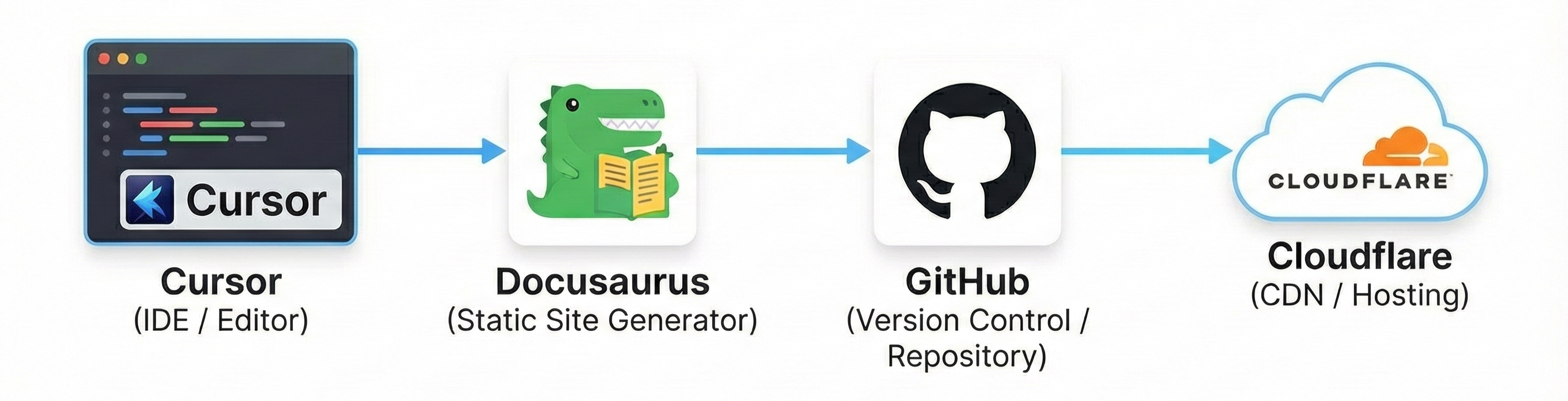
TMI: This course website is built with Docusaurus (a React-based static site generator) and MDX for content. The source code is available on GitHub.
What's next?
We're excited to begin this journey into AI in healthcare with you. Over the next two weeks, you'll explore how AI models work, how they're implemented in clinical systems, and how they impact patients and providers. This course will give you the foundational knowledge and critical thinking skills needed to navigate an AI-enabled healthcare landscape.
Next up: Framework for implementing AI